
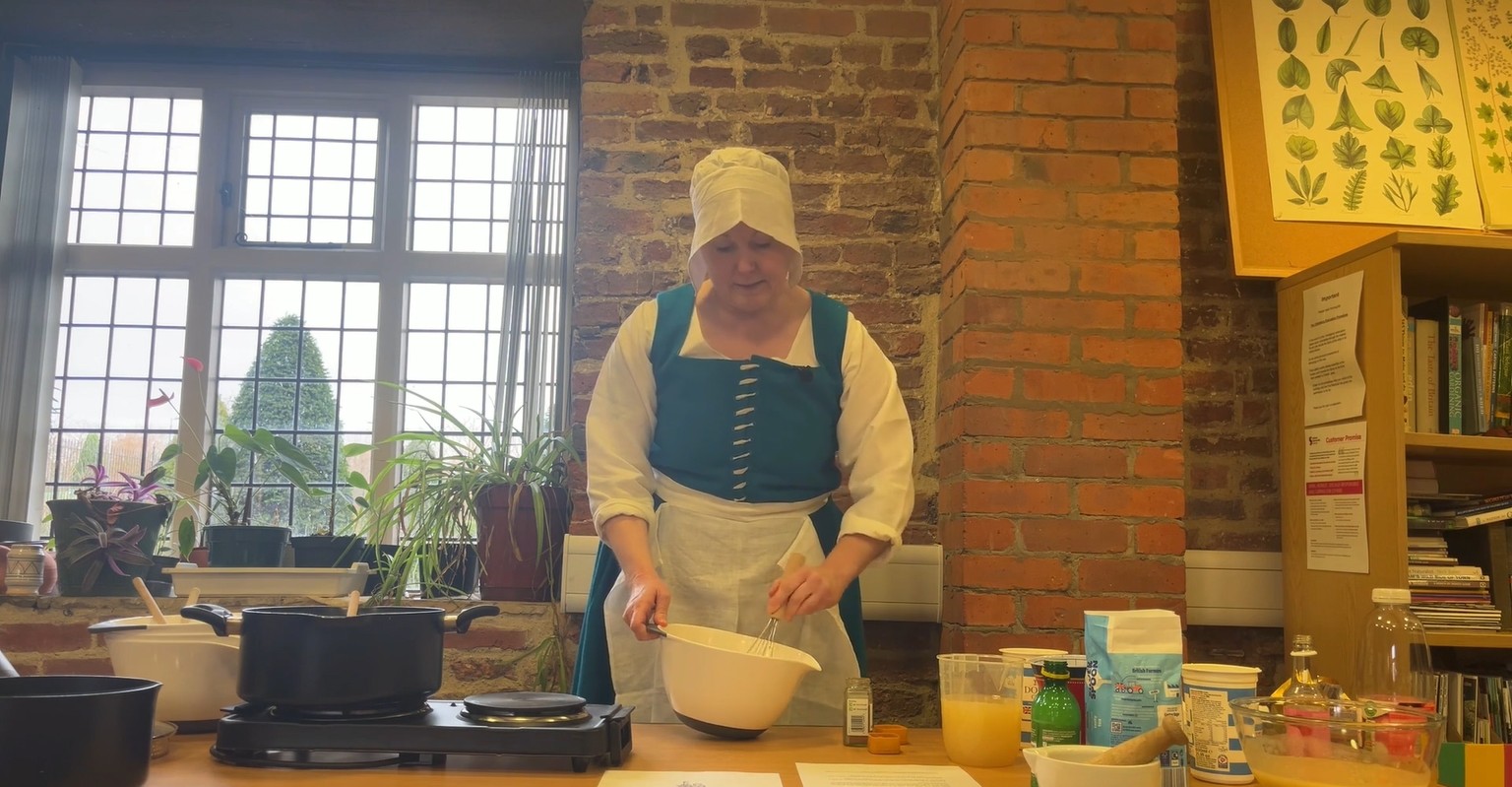
Remaking these recipes is practical way for pupils to find out how Tudors and Stuarts used food, drink and poultices to help them sleep. We have some make along videos and recipe cards to help you.
Apple Moyse
Make an apple ‘moyse’ or apple curd as we might call it. Apples were believed to help you sleep in the 16th and 17th centuries due to their cool and moist properties. They would serve cooked apples with warming spices as they felt this helped to prevent indigestion and nightmares, which could be brought on by eating extremely cold foods, especially in winter.
Lettuce Poultice
A poultice was a strip of cloth used like a plaster or bandage, onto which a medicinal paste could be spread. A lettuce poultice was most often used to cool the body, and especially the head since lettuce has a high water content.
Posset
A posset was a drink or pudding made from curdling cream. Our posset recipe is adapted from a handwritten recipe found in the Folger Library in Washington DC from c.1626.
Ingredients such as rosewater and hemp seeds, that were believed to cause sleep, were frequently added to posset recipes to help tackle minor illnesses, especially amongst children.
Barley Water
This drink may sound familiar. Try this recipe and see how it compares with shop bough barley water. Barley was thought to be a sleepy ingredient as it cooled the body gently.
Rose Jam
Making jam was a way of preserving foods for the winter months. This recipe comes from a cookbook author called Hannah Woolley and was featured in her book The Queen-like Closet (1670). Lots of different flowers could be made into a jam or ‘conserve’ in this way.