
Take a Closer Look
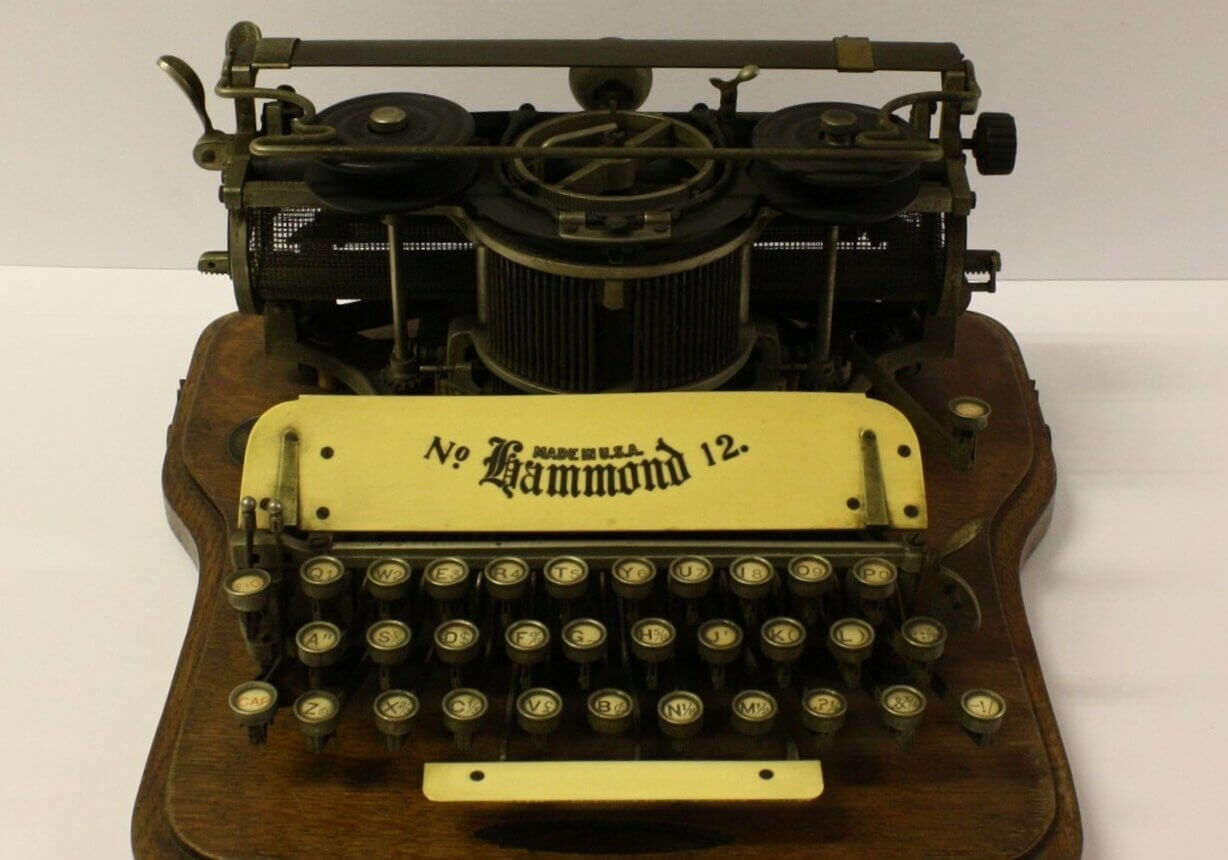
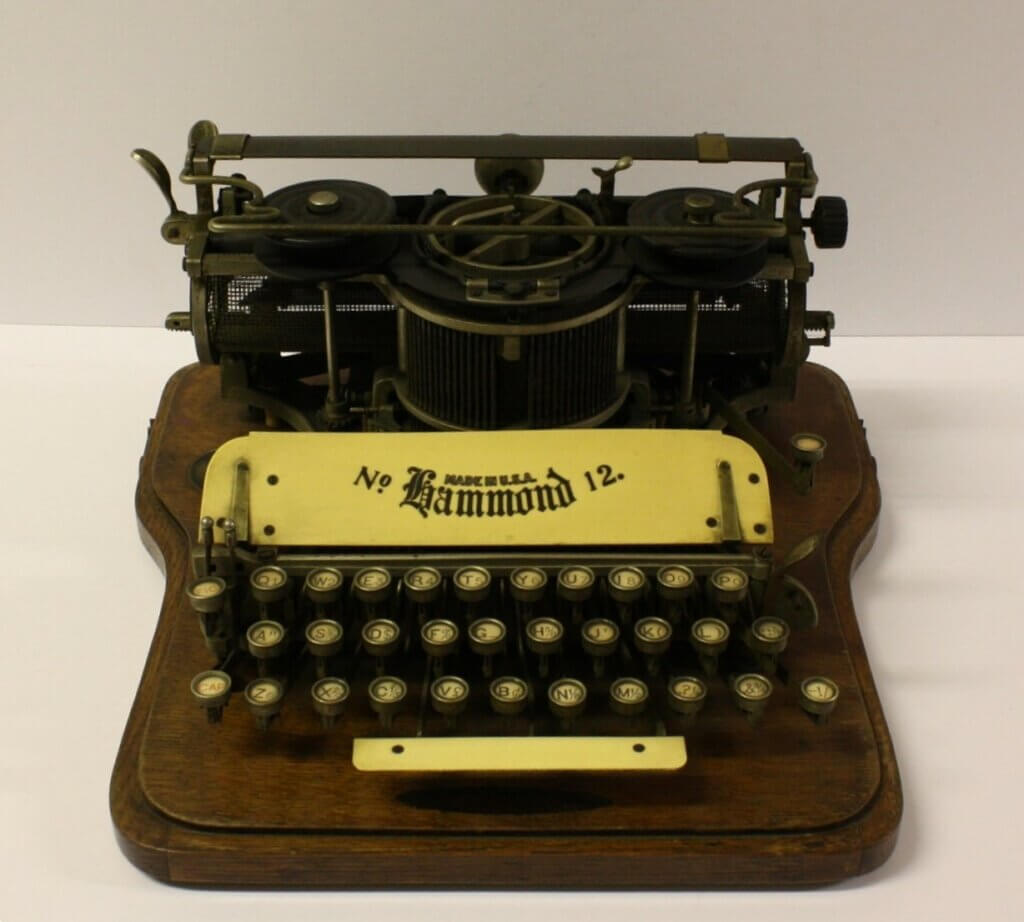
Do you know what this object is?
Look at the keys, do they look familiar?
In what ways is it similar to something you may use today?
The History of Typewriters
Typewriters like this were invented in 1868 and became common in offices from the 1880s as jobs and were speeding up due to industrialisation. Typewriters allowed messages to be written much faster than was possible by hand. The keys on a typewriter strike an inked ribbon, pushing the ink against the paper and creating a typed letter. Typists had to be very precise because there was no delete key!
The keyboard of a typewriter is the same that we use on computers now, and typewriters were replaced by computers in most offices by the 1980s.
During the First World War women did the jobs that used to belong to men while the men were off at war. When the war ended and the men came back, typewriting in offices was one of the few jobs it was considered appropriate for women to keep. Typewriters were mainly used by women and schools were created to teach women how to type very quickly. Typewriters made it easier for women to get further education and get jobs, though they often weren’t paid very well.
Discussion
Have you been taught to type in school?
Do you think typewriting would be easier or harder than using a computer? Why?
Activity
Natural Print Making
For this activity you need a few different objects from nature. Go and gather leaves, flowers, grass, sticks, rocks, or anything else you can find outside.
Extension Activity
Typists would need to type very quickly and make very few mistakes because it wasn’t possible to go back on a typewriter. Even today secretaries and people who type for a living need to type quickly, some secretaries can type at 90 words per minute! Would you be able to be a typist? Take a touch-typing test online to see how quickly you can type.